


Ontario leads
Practice-changing research
Cancer research is for cancer patients. Every new discovery and technological advancement led by OICR researchers aims to improve the care that cancer patients receive when they enter a hospital, clinic or doctor's office in Ontario.
Ontario-developed 3D ultrasound improving cancer detection and treatment worldwide
Accurate imaging is essential for diagnosing cancer and guiding treatment, yet traditional tools do not always provide a complete picture. Over two decades of innovation, OICR’s Dr. Aaron Fenster has led the development of 3D ultrasound systems that offer clearer views to support clinical decision-making. First used to improve prostate biopsies, the technology is now applied in breast screening for dense tissue, tumour ablation and more precise radiation procedures. Some systems are already used in clinics worldwide, while others are advancing toward broader use in Ontario. These innovations, driven by clinical need, demonstrate how Ontario research is strengthening cancer imaging and expanding options for care.
Read moreNew cancer imaging and treatment technology advances to first human trial
More precise ways to detect and treat tumours can help people with cancer live longer and reduce potential side effects from treatment. A new clinical trial will test porphysomes, a technology developed by OICR-supported scientist Dr. Gang Zheng that can help locate tumours and support cancer treatment. The trial is tracking how these nanoparticles behave in the body and evaluating whether they are safe for use with patients who have metastatic ovarian cancer. This landmark research is moving a made-in-Ontario innovation one step closer to the clinic and could open new possibilities for imaging and treatment across multiple cancer types.
Read moreExpanding genetic testing could make common chemotherapies safer for Ontario cancer patients
Common chemotherapies can cause severe, sometimes life-threatening side effects that are not always predicted by current genetic tests. An OICR-funded team used advanced genome sequencing to identify four previously under-recognized gene variants linked to serious side effects from chemotherapy treatment for colorectal cancer. These findings could help expand genetic screening for colorectal cancer to better identify patients who would benefit from more personalized chemotherapy dosing. It builds on Ontario’s existing testing program and points to how evidence-driven updates could further improve safety and care across the province.
Read moreOICR-supported research helping immunocompromised cancer patients get vaccinated
Cancer and its treatments can affect a person’s immune system, leaving them vulnerable to vaccine-preventable diseases. With support from OICR, University of Waterloo researchers are piloting a program to help immunocompromised cancer patients get necessary vaccines. VaxCheck is a tool that guides health professionals to create vaccination action plans with their patients. The program will be rolled out at an Ottawa pharmacy that provides cancer care, and then will be refined so it can be implemented in other healthcare settings. “We hope this research will result in a VaxCheck program that is ready for use by various health professionals and supports the unique needs of people with cancer,” says Dr. Sherilyn Houle, Associate Professor in the University of Waterloo School of Pharmacy.
Read more2,024 patients have been recruited to
145 OICR-supported clinical trials (2025-26)
OICR collaborates with
743 organizations from
64 countries around the world
(2025-26)
288 new academic and
87 new private sector collaborations (2025-26)
Ontario leads
Early and accurate cancer diagnosis
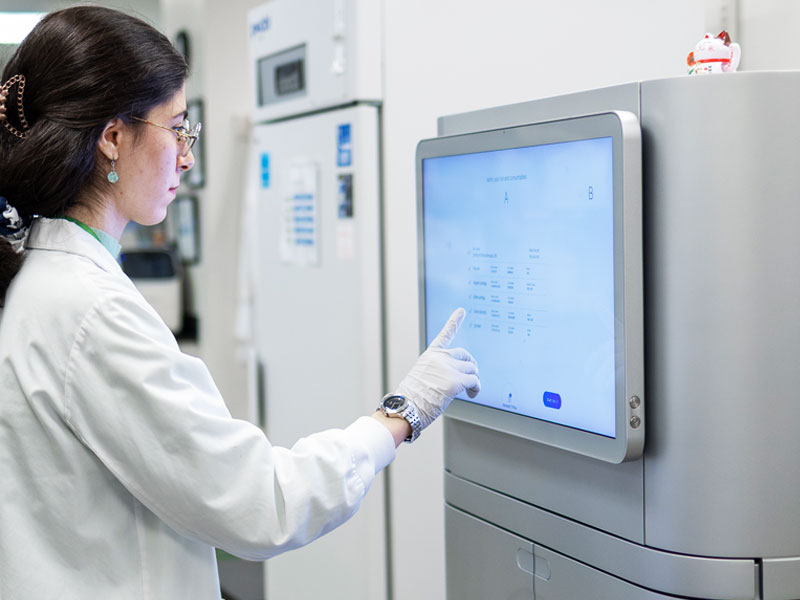
The key to treating cancer better is finding it as soon as possible and knowing as much as possible about each case. From blood tests that detect tiny traces of tumour DNA to faster, more cost-efficient genetic testing, OICR researchers across Ontario are advancing the knowledge and tools to diagnose cancer promptly and precisely.
Streak of discoveries brings cancer blood tests closer to impacting Ontario patients
Early cancer detection often depends on tests that can be invasive or miss disease in its earliest stages. New advances in blood-based testing could change that. OICR’s Dr. Trevor Pugh and collaborators have developed a series of “liquid biopsy” tests that detect tiny traces of tumour DNA in the bloodstream, often before cancers appear on scans. Their recent studies span 12 cancer types and include tools to detect liver cancer, predict treatment response and monitor disease during therapy. Together, these advances show how blood-based testing could transform screening and care. With strong collaboration across Ontario and growing evidence, this work positions the province to help shape how liquid biopsy is integrated into future healthcare.
Read moreTechnological first in DNA sequencing leads to real-time brain cancer diagnosis
An earlier technological breakthrough by OICR’s Dr. Jared Simpson is now helping surgeons classify brain tumour types in real-time in the operating room. Back in 2017, Simpson developed software for the Oxford Nanopore platform, a tool to sequence DNA that is faster and more portable than other sequencing platforms. His software made it possible for Nanopore to detect DNA methylation, a cellular process linked to cancer, in a fraction of the time it takes other sequencers. In the years since, Simpson’s software has been used by several research teams studying DNA methylation, and laid the groundwork for more Nanopore advancements. These breakthroughs culminated last year, when a U.K. research team used Nanopore to diagnose brain tumour subtypes during surgery, allowing clinicians to make real-time surgical decisions based on the results.
Read moreMassive international clinical trial aims to answer a pivotal question in breast cancer screening
Breast cancer screening saves lives, yet current methods can miss aggressive tumours or lead to unnecessary follow-up tests. A major international trial co-led by Dr. Martin Yaffe is evaluating whether a newer 3D imaging approach can improve breast cancer detection. TMIST is comparing standard mammography with digital breast tomosynthesis in about 108,000 women, including participants in Ontario. Early findings and prior studies suggest 3D imaging may be better at identifying the most aggressive cancers and reducing false alarms. With strong Canadian leadership and participation, the trial will help determine the future of breast cancer screening in Ontario and beyond.
Read moreProvincial hereditary cancer registry driving discoveries and linking Ontarians to resources
About one in 10 cancers in Ontario are hereditary, caused by genes passed from parents to their children. Having these genes puts someone at high risk of developing cancer, making early and accurate diagnosis especially important. To help improve how hereditary cancers are detected, diagnosed and treated, OICR created the Ontario Hereditary Cancer Research Network (OHCRN), which officially launched its patient portal last year. The portal allows Ontarians who have had genetic testing for hereditary cancers to register and contribute information about their health. That data will be used to build the first-ever provincial database on hereditary cancers, and approved research projects will be able to access the data to drive discoveries.
Read more363 products, practices or services are being developed to solve problems within cancer research or care (2025-26)
1,912 highly qualified personnel across Ontario enhanced their knowledge, training and skills through participation in OICR-supported projects (2025-26)
OICR-supported researchers contributed to 417 publications in 2025-26, which have already been cited more than 1,000 times, three times the world average.

Ontario leads
AI for cancer innovation
A new era of AI-driven innovation is here, and OICR is helping Ontario lead the way. OICR researchers are building the Big Data resources that will power the future of AI discovery and designing the software that will turn that data into life-saving solutions.
AI-generated genomes could accelerate precision medicine without compromising patient confidentiality
High-quality genomic data can unlock new innovations in precision medicine — but the need to protect patient confidentiality can make that difficult. Researchers at OICR and the University of Toronto are tackling that challenge with OncoGAN, an AI system that generates realistic synthetic cancer genomes with no link to any real person. The tool can help researchers test and improve the algorithms they use as part of genomic research, without exposing personal health information. Because the simulated genomes come with fully known DNA sequences, they can also be used to benchmark genomic tools more precisely. The result is a promising new way to strengthen cancer research and expand the reach of data-driven discovery without compromising patient confidentiality.
Read moreNew AI platform aims to unlock cancer data and speed discoveries for patients
Cancer databases hold the keys to new discoveries, but leveraging the vast amounts of data available can be challenging. With new national funding, OICR’s Dr. Melanie Courtot and her team are developing an open-source AI platform that allows scientists to securely explore large cancer datasets using simple, natural language queries. This approach will make it faster and easier to uncover insights, share reproducible analyses and work with sensitive data while protecting confidential data. Together with a second recent award for the Pan-Canadian Genomics Library, Courtot and colleagues are helping accelerate local discoveries by strengthening Canada’s capacity to use data to improve cancer care.
Read more
Ontario leads
A thriving life science economy
With OICR driving innovations and FACIT investing in entrepreneurs, Ontario is turning cancer discoveries into valuable intellectual property and prosperous biotech companies. That means more homegrown innovations reaching Ontario cancer patients and a stronger economy for all Ontarians.
Real-time imaging tool to help surgeons avoid nerve damage wins FACIT award
Patients undergoing cancer surgery face potentially life-changing side effects like nerve damage. NerView Surgical, an Ontario start-up, has developed a handheld imaging tool that lets surgeons see nerves in real-time during procedures. This clearer view can help avoid accidental injury, a leading cause of post-operative complications, and may also improve operating room efficiency. The innovation recently won the $100,000 Ernsting Entrepreneurship Award at FACIT’s 2026 Falcons’ Fortunes competition. With early validation underway, the technology aims to support safer surgeries and better recovery, highlighting Ontario’s role in advancing practical solutions that improve care.
Read moreOntario commercialization partnership fills gap for women entrepreneurs and advances cancer discoveries
Two of Ontario’s leading drivers of life sciences innovation have teamed up to empower the province’s women entrepreneurs, and it’s helping bring life-changing cancer discoveries closer to patients who need them. FACIT and OBIO® partnered to create the Women’s Synergistic Entrepreneurship and Economic Development (WeSEED) program, which provides business training, venture capital and other resources to the women entrepreneurs behind made-in-Ontario cancer innovations. Launched in March 2025, the program addresses a critical gap for women-led start-ups, which receive just over two per cent of venture capital globally. WeSEED creates an intentional pathway to move promising women-led innovations from concept, to company, to investment and impact.
Read more41 start-ups created since inception. With the support of OICR and FACIT.
788 employees at all active start-ups in our portfolio.
(2025-26)
3 new start-ups
(2025-26)
9 new invention disclosures
(2025-26)
11 new patent applications
(2025-26)
10 new patents awarded
(2025-26)
Ontario leads
The next generation of research talent
The next generation of Ontario researchers will make discoveries that will change the face of cancer care forever. OICR is offering the resources, infrastructure and opportunities to help them realize their full potential.
Hands-on internship helps Northern Ontario student pursue cancer research career path
Giving students meaningful, real-world experience helps build a stronger cancer research workforce. Through an OICR-sponsored Indigenous summer internship, Sudbury undergraduate student Chelsea Leduc gained hands-on experience in a molecular biology lab studying radiation resistance in breast cancer. The program provided practical training and exposure to active research, helping her build skills and contribute to ongoing scientific work. This experience strengthened her confidence, clarified her career goals and reaffirmed her interest in both research and medicine. By supporting Indigenous students and early career talent, initiatives like this are supporting Indigenous participation in science and helping develop the next generation of cancer researchers in Ontario.
Read moreCo-op program at OICR helps students build skills and advance cancer research
Advancing cancer research depends on bringing fresh perspectives and practical skills into the lab. At OICR, co-op students contribute directly to ongoing projects, working on DNA sequencing, image analysis and computational challenges. Through structured placements and day-to-day collaboration, students gain experience with real research questions while contributing to key initiatives. This approach has earned OICR a 2025 Employer Impact Award based on student feedback. By creating meaningful opportunities for students to contribute and learn, OICR is strengthening its research environment while helping equip emerging talent with the experience needed to support future cancer discoveries in Ontario.
Read morePhD student exploring the biology of metastatic cancer
Zoe Klein is looking at the gene expression factors that cause cancer to spread to other parts of the body in the hopes of making cancer treatment more precise.
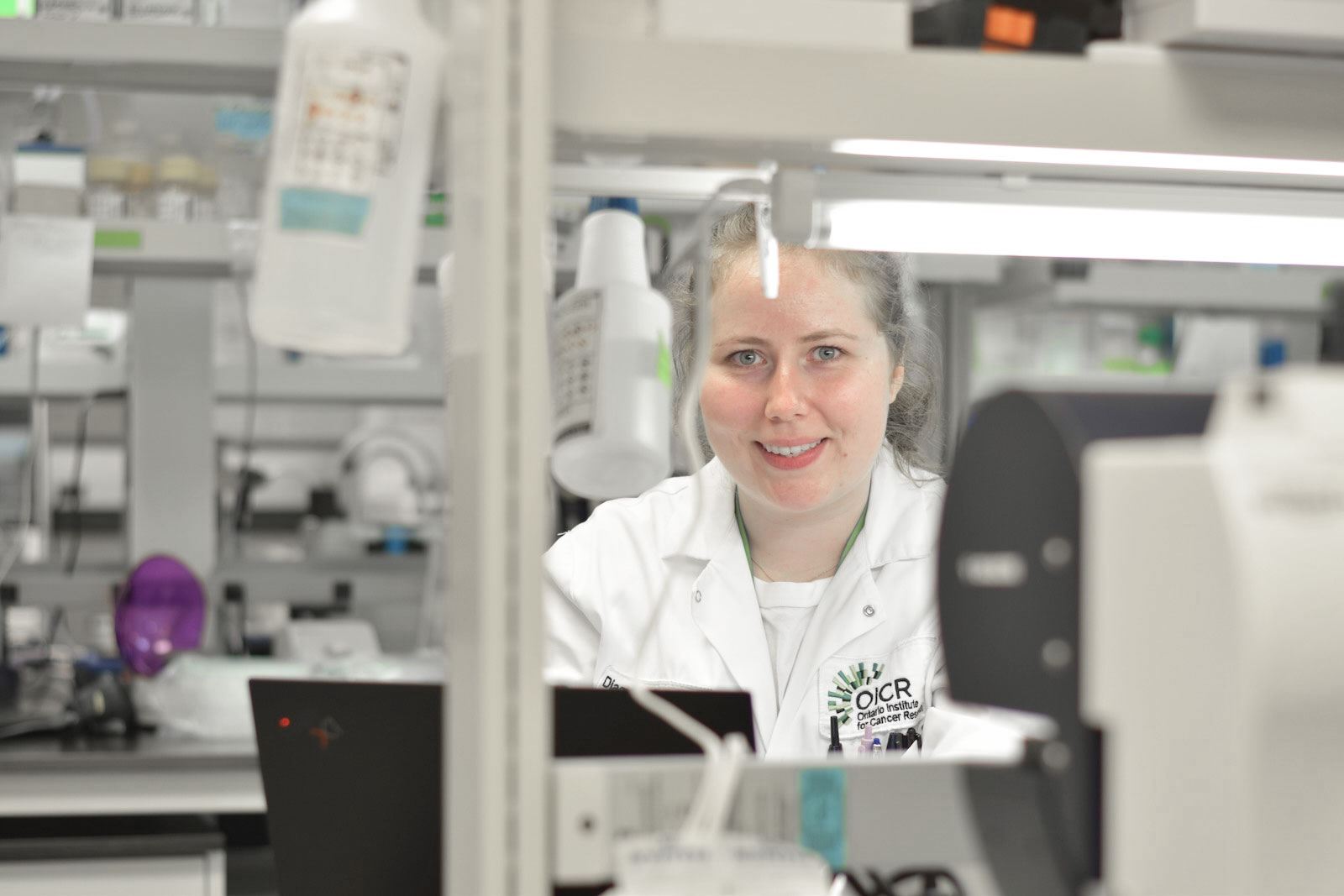
Postdoctoral researcher driving innovative drug discovery research
Dr. Diandra Zipinotti dos Santos is hoping to develop new therapeutic options to fight tumours, motivated by her grandmother’s experience with breast cancer.
29 researchers attracted to Ontario as a result of OICR-supported projects (2025-26)
335 students hosted by OICR-funded projects
(2025-26)
631 educational events supported by OICR to share knowledge and provide training (2025-26)
Ontario leads
Together
Ontario’s biggest asset is its people, especially when they work together. OICR unites a provincewide community of scientists, clinicians, policymakers and patients with a mission to improve the lives of everyone affected by cancer and build a stronger Ontario.
OICR celebrates 20 years of changing lives at anniversary celebration
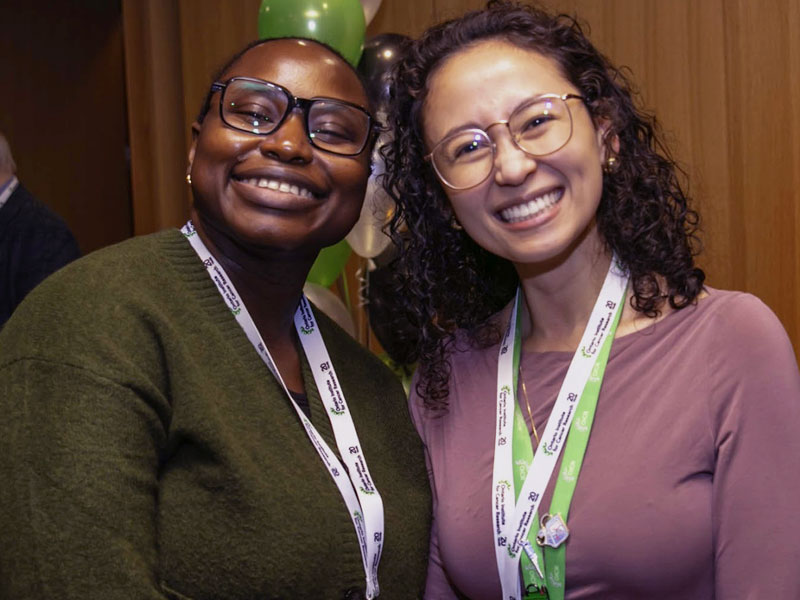
Ontario’s cancer research community recently came together to celebrate two decades of life-changing impact at OICR’s 20th anniversary celebration. Held December 11, 2025 in Toronto, the celebration marked the anniversary of OICR’s founding, which was first announced by the Government of Ontario in December 2005. Key figures from OICR’s past and present gathered at the celebration to commemorate all the institute had achieved for Ontario’s health and economic prosperity over the past two decades, and look ahead to new innovations that will transform cancer care and life sciences for generations to come.
Read moreCancer Research Changed My Life
Cancer research is personal. Every day, the breakthroughs made by cancer researchers transform people’s lives for the better. Cancer research helps patients live longer, helps families stay together, and helps scientists make a difference. As Ontario’s cancer research institute, OICR unites a community of scientists, cancer patients, clinicians and everyday Ontarians. Cancer Research Changed My Life shines a spotlight on that community and what we have achieved together.
Visit the site105 patient partners contributed to OICR research projects (2025-26)
100% of research projects considered EDI in their proposals (2025-26)
56 interviews were conducted with media about OICR-funded projects (2025-26)
Ontario leads the way to a better future
Ontario’s leadership in cancer research is delivering real benefits for patients, communities and the economy. Through collaboration, innovation and discovery, OICR is helping shape a healthier future while strengthening Ontario’s position as a global life sciences leader.
Follow OICR to learn more about this brighter future. Subscribe to our newsletter or follow us on Linkedin, Instagram, and Bluesky.